Go Back
Last Updated :
Last Updated :
Mar 9, 2026
Mar 9, 2026

Form 5330 Guide: Correcting Retirement Plan Errors and Managing Excise Tax Liabilities
For founders steering startups, agencies, or e-commerce companies with employee benefit plans, navigating the nuances of retirement plan compliance is essential. Errors can lead to costly excise taxes and operational headaches. Form 5330 is the critical IRS filing for reporting and paying excise taxes related to prohibited transactions, plan terminations, excess contributions, and other retirement plan errors.
This guide unpacks what you need to know about Form 5330, common mistakes, excise tax liabilities, and effective correction strategies, helping you stay compliant and make informed business decisions.
What is Form 5330 and Who Must File It?
At its core, Form 5330—officially titled “Return of Excise Taxes Related to Employee Benefit Plans”—alerts the IRS when certain tax-exempt retirement plans have incurred excise taxes due to prohibited transactions or operational errors. The form is a key enforcement tool ensuring these plans remain compliant with Internal Revenue Code requirements.
When is Form 5330 Required?
You must file Form 5330 if your company’s employee benefit plan encounters any of the following issues:
Engages in a prohibited transaction, such as self-dealing or conflicts of interest involving the plan.
Experiences a prohibited allocation or excess contributions (e.g., non-deductible contributions).
Operates under a mistake that triggers an excise tax, such as late deposits of participant contributions.
Undertakes an impermissible plan termination or fails to file the required notices.
Violates reportable transaction requirements.
In other words: if your retirement plan commits errors that cause excise tax liabilities, Form 5330 is your filing vehicle. Typical plan types requiring this form include:
401(k) and other defined contribution plans
Defined benefit pension plans
Profit-sharing plans
Employee stock ownership plans (ESOPs)
Steering clear of pitfalls starts with knowing these requirements upfront. For busy founders, regularly revisiting your plan operations against IRS rules is critical.
Common Retirement Plan Errors That Require Form 5330 Filing
Understanding what triggers Form 5330 helps avoid expensive tax liabilities. Here are some frequent mistakes:
Prohibited Transactions
A prohibited transaction occurs when a plan engages in a deal with a " disqualified person" (plan insiders or related parties) that benefits the insider improperly. Examples include:
Selling or leasing property between a plan and an employer
Lending money or extending credit to insiders
Using plan assets for the personal benefit of fiduciaries
This error is costly because the IRS imposes excise tax rates starting at 15% of the amount involved, escalating further if not corrected promptly.
Excess Contributions or Allocation Errors
Plans must follow strict IRS limits on contributions. If your plan accepts contributions beyond legal limits or allocates them incorrectly, excise taxes apply. These typically surface from administrative errors or misunderstanding of contribution thresholds.
Late Deposits of Participant Contributions
401(k) participant deferrals and loan repayments must be deposited timely to avoid excise tax. Delays—even short ones—trigger penalties assessed on the late contribution amount.
Impermissible Plan Termination
If your company terminates a qualified plan without following the correct procedures, the plan can become disqualified and subject to excise taxes.
Other Compliance Failures
Issues such as late or erroneous filing of required notices may require the submission of Form 5330. For example, improper reporting of prohibited transactions or failure to notify the IRS about plan terminations.
Excise Tax Rates and Penalties Explained
If your plan incurs an excise tax liability, there are specific IRS rates and penalty mechanics founders need to understand to anticipate financial impacts:
Violation Type | Excise Tax Rate | Additional Notes |
Prohibited transaction | 15% of amount involved, up to 100% if uncorrected | Escalates if unaddressed after IRS notice |
Failure to file Form 5330 | $10 per day of delay, up to $5,000 | Applies per return |
Late deposits of participant contributions | 10% of the delayed amount | Crucial for 401(k) plans |
Excess contributions | 20% on excess contributions | Impacts both employer and employee contributions |
You and your finance team should regularly monitor for any signs of these violations and calculate potential tax exposure. Given the complexity, consulting with tax advisors savvy in employee benefit plans can prevent surprises.
Filing Deadlines and Extension Options for Form 5330
Form 5330 must be filed by the last day of the 7th month after the end of the plan year during which the excise tax was incurred. For most calendar-year plans, this means a July 31 deadline following a December 31 plan year end.
Can You Request an Extension?
Yes. Use Form 5558 to request an automatic 3-month extension to file Form 5330. However, keep in mind:
Excise tax must still be paid by the original deadline.
Interest and late payment penalties accrue if the payment is late.
This means the extension helps you avoid filing penalties—but not payment penalties.
Correcting Retirement Plan Errors: Tools and Tactics
Given the potential impact of excise tax liabilities, founders must put correction strategies in place when errors occur. Here are effective approaches:
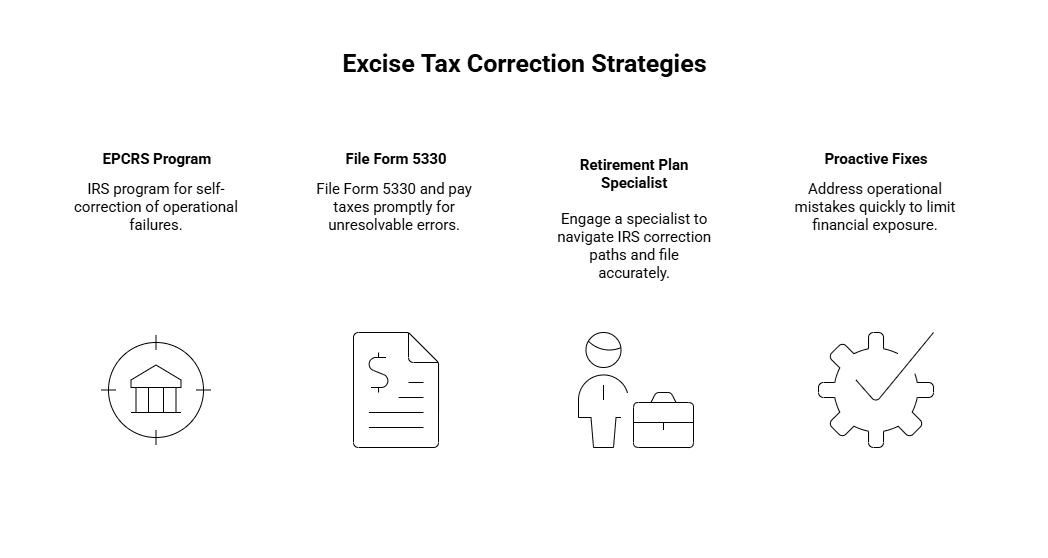
Employee Plans Compliance Resolution System (EPCRS)
The IRS offers the EPCRS program, which allows plan sponsors to self-correct many common operational failures and prohibited transactions. Corrections under this program can help reduce or eliminate excise tax liabilities.
Highly recommended for operational errors discovered internally.
Must correct according to IRS guidance and maintain documentation.
File Form 5330 and Pay Taxes Promptly
Some errors still require filing and cannot be resolved through EPCRS. In such cases:
File Form 5330 on time.
Pay all applicable excise taxes promptly to minimize interest and penalties.
Engage a Retirement Plan Specialist
Third-party service providers or CPAs familiar with employee benefit regulations can:
Spot errors early
Navigate IRS correction paths
Prepare and file Form 5330 accurately
Proactive Operational Fixes
Addressing operational mistakes quickly can limit financial exposure. An example would be:
Depositing missed participant contributions with lost earnings as soon as an error is detected.
Implement procedural changes to prevent future lapses.
Late 401(k) Contribution Example
Let’s say your startup collects $50,000 in salary deferrals from employees in December, but deposits them in January. That one-month deposit delay triggers:
A 10% excise tax = $5,000
Form 5330 required by July 31
If you miss the filing deadline:
$10 per day penalty begins accruing, up to $5,000
Interest accumulates from due date
You can extend the filing deadline via Form 5558, but the $5,000 tax liability must be paid by July 31.
Best Practices: Excise Tax Compliance
Founders should integrate tax compliance into their operational standards. Here’s a table of actions to strengthen your position:
Action Item | Benefit | How to Execute |
Perform Annual Plan Audits | Catch and correct issues early | Hire qualified ERISA plan auditors |
Automate Participant Contribution Deposits | Prevent excise tax due to deposit delays | Integrate payroll and retirement systems |
Train Finance Teams | Creates internal oversight and accountability | Provide IRS resource sessions or external training |
Partner With Retirement Plan Advisors | Brings expert guidance and reduces compliance risk | Form ongoing relationship with trusted advisors |
Outsource to Tax-Specialized Services | Minimize penalty exposure and filing errors |
Making Form 5330 Part of Your Compliance Strategy
For startup leaders managing employee benefit plans, mastering the nuances of Form 5330 is a founder-level obligation. It’s not just about avoiding penalties—it's about building a resilient business culture and protecting employees’ long-term futures.
Keep in mind:
Excise tax liabilities are avoidable when plans are administered effectively
Form 5330 is part of a broader toolkit to maintain compliance
Mistakes don’t define your company—but how you correct them does
When in doubt, tap into tax experts who understand startup dynamics and can help you respond quickly and correctly to correction needs. A little proactive effort goes a long way.
For founders steering startups, agencies, or e-commerce companies with employee benefit plans, navigating the nuances of retirement plan compliance is essential. Errors can lead to costly excise taxes and operational headaches. Form 5330 is the critical IRS filing for reporting and paying excise taxes related to prohibited transactions, plan terminations, excess contributions, and other retirement plan errors.
This guide unpacks what you need to know about Form 5330, common mistakes, excise tax liabilities, and effective correction strategies, helping you stay compliant and make informed business decisions.
What is Form 5330 and Who Must File It?
At its core, Form 5330—officially titled “Return of Excise Taxes Related to Employee Benefit Plans”—alerts the IRS when certain tax-exempt retirement plans have incurred excise taxes due to prohibited transactions or operational errors. The form is a key enforcement tool ensuring these plans remain compliant with Internal Revenue Code requirements.
When is Form 5330 Required?
You must file Form 5330 if your company’s employee benefit plan encounters any of the following issues:
Engages in a prohibited transaction, such as self-dealing or conflicts of interest involving the plan.
Experiences a prohibited allocation or excess contributions (e.g., non-deductible contributions).
Operates under a mistake that triggers an excise tax, such as late deposits of participant contributions.
Undertakes an impermissible plan termination or fails to file the required notices.
Violates reportable transaction requirements.
In other words: if your retirement plan commits errors that cause excise tax liabilities, Form 5330 is your filing vehicle. Typical plan types requiring this form include:
401(k) and other defined contribution plans
Defined benefit pension plans
Profit-sharing plans
Employee stock ownership plans (ESOPs)
Steering clear of pitfalls starts with knowing these requirements upfront. For busy founders, regularly revisiting your plan operations against IRS rules is critical.
Common Retirement Plan Errors That Require Form 5330 Filing
Understanding what triggers Form 5330 helps avoid expensive tax liabilities. Here are some frequent mistakes:
Prohibited Transactions
A prohibited transaction occurs when a plan engages in a deal with a " disqualified person" (plan insiders or related parties) that benefits the insider improperly. Examples include:
Selling or leasing property between a plan and an employer
Lending money or extending credit to insiders
Using plan assets for the personal benefit of fiduciaries
This error is costly because the IRS imposes excise tax rates starting at 15% of the amount involved, escalating further if not corrected promptly.
Excess Contributions or Allocation Errors
Plans must follow strict IRS limits on contributions. If your plan accepts contributions beyond legal limits or allocates them incorrectly, excise taxes apply. These typically surface from administrative errors or misunderstanding of contribution thresholds.
Late Deposits of Participant Contributions
401(k) participant deferrals and loan repayments must be deposited timely to avoid excise tax. Delays—even short ones—trigger penalties assessed on the late contribution amount.
Impermissible Plan Termination
If your company terminates a qualified plan without following the correct procedures, the plan can become disqualified and subject to excise taxes.
Other Compliance Failures
Issues such as late or erroneous filing of required notices may require the submission of Form 5330. For example, improper reporting of prohibited transactions or failure to notify the IRS about plan terminations.
Excise Tax Rates and Penalties Explained
If your plan incurs an excise tax liability, there are specific IRS rates and penalty mechanics founders need to understand to anticipate financial impacts:
Violation Type | Excise Tax Rate | Additional Notes |
Prohibited transaction | 15% of amount involved, up to 100% if uncorrected | Escalates if unaddressed after IRS notice |
Failure to file Form 5330 | $10 per day of delay, up to $5,000 | Applies per return |
Late deposits of participant contributions | 10% of the delayed amount | Crucial for 401(k) plans |
Excess contributions | 20% on excess contributions | Impacts both employer and employee contributions |
You and your finance team should regularly monitor for any signs of these violations and calculate potential tax exposure. Given the complexity, consulting with tax advisors savvy in employee benefit plans can prevent surprises.
Filing Deadlines and Extension Options for Form 5330
Form 5330 must be filed by the last day of the 7th month after the end of the plan year during which the excise tax was incurred. For most calendar-year plans, this means a July 31 deadline following a December 31 plan year end.
Can You Request an Extension?
Yes. Use Form 5558 to request an automatic 3-month extension to file Form 5330. However, keep in mind:
Excise tax must still be paid by the original deadline.
Interest and late payment penalties accrue if the payment is late.
This means the extension helps you avoid filing penalties—but not payment penalties.
Correcting Retirement Plan Errors: Tools and Tactics
Given the potential impact of excise tax liabilities, founders must put correction strategies in place when errors occur. Here are effective approaches:
Employee Plans Compliance Resolution System (EPCRS)
The IRS offers the EPCRS program, which allows plan sponsors to self-correct many common operational failures and prohibited transactions. Corrections under this program can help reduce or eliminate excise tax liabilities.
Highly recommended for operational errors discovered internally.
Must correct according to IRS guidance and maintain documentation.
File Form 5330 and Pay Taxes Promptly
Some errors still require filing and cannot be resolved through EPCRS. In such cases:
File Form 5330 on time.
Pay all applicable excise taxes promptly to minimize interest and penalties.
Engage a Retirement Plan Specialist
Third-party service providers or CPAs familiar with employee benefit regulations can:
Spot errors early
Navigate IRS correction paths
Prepare and file Form 5330 accurately
Proactive Operational Fixes
Addressing operational mistakes quickly can limit financial exposure. An example would be:
Depositing missed participant contributions with lost earnings as soon as an error is detected.
Implement procedural changes to prevent future lapses.
Late 401(k) Contribution Example
Let’s say your startup collects $50,000 in salary deferrals from employees in December, but deposits them in January. That one-month deposit delay triggers:
A 10% excise tax = $5,000
Form 5330 required by July 31
If you miss the filing deadline:
$10 per day penalty begins accruing, up to $5,000
Interest accumulates from due date
You can extend the filing deadline via Form 5558, but the $5,000 tax liability must be paid by July 31.
Best Practices: Excise Tax Compliance
Founders should integrate tax compliance into their operational standards. Here’s a table of actions to strengthen your position:
Action Item | Benefit | How to Execute |
Perform Annual Plan Audits | Catch and correct issues early | Hire qualified ERISA plan auditors |
Automate Participant Contribution Deposits | Prevent excise tax due to deposit delays | Integrate payroll and retirement systems |
Train Finance Teams | Creates internal oversight and accountability | Provide IRS resource sessions or external training |
Partner With Retirement Plan Advisors | Brings expert guidance and reduces compliance risk | Form ongoing relationship with trusted advisors |
Outsource to Tax-Specialized Services | Minimize penalty exposure and filing errors |
Making Form 5330 Part of Your Compliance Strategy
For startup leaders managing employee benefit plans, mastering the nuances of Form 5330 is a founder-level obligation. It’s not just about avoiding penalties—it's about building a resilient business culture and protecting employees’ long-term futures.
Keep in mind:
Excise tax liabilities are avoidable when plans are administered effectively
Form 5330 is part of a broader toolkit to maintain compliance
Mistakes don’t define your company—but how you correct them does
When in doubt, tap into tax experts who understand startup dynamics and can help you respond quickly and correctly to correction needs. A little proactive effort goes a long way.
This article was co-written by:
Content
This article was co-written by:
2026
© Haven All Rights Reserved
Haven is a financial technology company, not an FDIC-insured bank. Deposit account services are provided by OMB Bank, Member FDIC. Funds deposited into eligible checking and savings accounts are held at OMB Bank and may be eligible for FDIC insurance up to applicable limits. FDIC insurance protects against the failure of an FDIC-insured bank. Certain conditions must be satisfied for pass-through deposit insurance coverage to apply. Fees, terms, and conditions apply.
Cryptocurrency products and services are separate from the deposit account services provided by OMB Bank. Cryptocurrency is not offered, sponsored, endorsed, administered, held, or supported by OMB Bank. Cryptocurrency and other digital assets are not deposits, are not FDIC-insured, are not guaranteed by OMB Bank, and may lose value.
2026
© Haven All Rights Reserved
Haven is a financial technology company, not an FDIC-insured bank. Deposit account services are provided by OMB Bank, Member FDIC. Funds deposited into eligible checking and savings accounts are held at OMB Bank and may be eligible for FDIC insurance up to applicable limits. FDIC insurance protects against the failure of an FDIC-insured bank. Certain conditions must be satisfied for pass-through deposit insurance coverage to apply. Fees, terms, and conditions apply.
Cryptocurrency products and services are separate from the deposit account services provided by OMB Bank. Cryptocurrency is not offered, sponsored, endorsed, administered, held, or supported by OMB Bank. Cryptocurrency and other digital assets are not deposits, are not FDIC-insured, are not guaranteed by OMB Bank, and may lose value.
2026
© Haven All Rights Reserved
Haven is a financial technology company, not an FDIC-insured bank. Deposit account services are provided by OMB Bank, Member FDIC. Funds deposited into eligible checking and savings accounts are held at OMB Bank and may be eligible for FDIC insurance up to applicable limits. FDIC insurance protects against the failure of an FDIC-insured bank. Certain conditions must be satisfied for pass-through deposit insurance coverage to apply. Fees, terms, and conditions apply.
Cryptocurrency products and services are separate from the deposit account services provided by OMB Bank. Cryptocurrency is not offered, sponsored, endorsed, administered, held, or supported by OMB Bank. Cryptocurrency and other digital assets are not deposits, are not FDIC-insured, are not guaranteed by OMB Bank, and may lose value.