Go Back
Last Updated :
Last Updated :
Jan 20, 2026
Jan 20, 2026

Form 1099-G: Reporting Government Grants and State Tax Refunds for Your Business
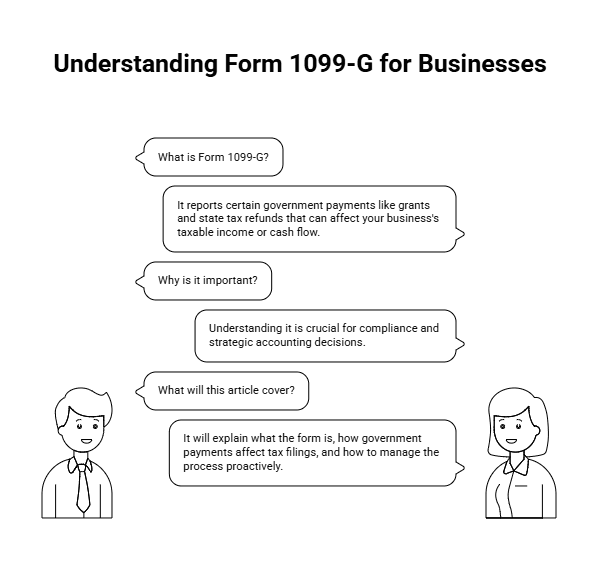
For founders leading startups, running e-commerce ventures, or managing agencies, understanding your financial reporting obligations is a critical lever for maintaining compliance and making strategic accounting decisions. Form 1099-G is one such form that holds significance because it reports certain government payments—including grants and state tax refunds—that may impact your business’s taxable income or cash flow planning.
This article offers a founder-focused, pragmatic guide on how to interpret, access, report, and act on Form 1099-G.
What Is Form 1099-G and Who Issues It?
Form 1099-G is a tax form issued primarily by federal, state, and local government agencies. It details payments made to a business or individual that could have tax implications. For founders, the common types of payments reported include:
Unemployment compensation, if you have received it (common for startups in transition phases or founders who draw unemployment benefits).
State or local income tax refunds, credits, or offsets (such as a refund of a prior year’s business-related state tax).
Government grants, including COVID-19 assistance programs and other economic stimulus funds.
Certain other payments like agricultural payments or taxable grants.
Who Sends Form 1099-G?
State labor departments, tax authorities, or other government agencies that made payments issue the 1099-G form. For example:
Your State Department of Labor may issue a 1099-G for unemployment benefits.
Your state’s tax department might send a 1099-G for refunds on state income taxes from prior years.
Federal and local agencies may issue 1099-Gs for economic grants awarded to your business.
These agencies send copies to both taxpayers and the IRS.
Pro founder tip: Keep your business’s mailing address and contact details updated with every government agency to avoid missing your Form 1099-G and keep your tax reporting timeline smooth.
Understanding the Key Boxes on Form 1099-G: What Matters for Your Business?
Navigating the boxes on Form 1099-G helps you understand which payments impact your tax return:
Box Number | Description | Possible Impact on Your Taxes |
1 | Unemployment compensation | Must be reported as income; taxable for most business taxpayers. |
2 | State or local income tax refunds, credits, or offsets | May be taxable if you itemized state taxes in the prior year. |
3 | Box for Other Government Payments (e.g., grants) | Usually taxable income; confirm with your tax advisor. |
4 | Federal income tax withheld | Withholding amount you can claim against tax liability. |
Note: Boxes 1 and 2 are most commonly relevant for startups and founders filing business returns.
When is the Amount in Box 2 Taxable?
If your business itemized deductions for state taxes in the year you received the refund, then the refund shown in Box 2 is often taxable income in the refund year. However, if you claimed the standard deduction, this refund is usually not taxable.
Reporting Form 1099-G Income: What You Need to Know
Do You Have to Report Form 1099-G Income?
Yes. The IRS requires you to report income included on Form 1099-G on your income tax return—even if you did not directly receive the form. Failure to report this income can trigger IRS notices or audits.
For example:
Unemployment compensation from Box 1 is taxable income. This applies even to self-employed founders if they received those benefits.
State tax refunds are potentially taxable income, depending on your previous year's deductions and whether you itemized.
Government grants reported in Box 3 are typically considered taxable business income unless specifically excluded by law.
How to Report Form 1099-G?
Unemployment Compensation: Report on Schedule 1 (Form 1040), Line 7, or relevant state tax forms.
State Tax Refunds: Include on Form 1040 if you itemized deductions in the prior year. Consult the IRS Worksheet for State and Local Income Tax Deduction to determine the taxable portion.
Government Grants: Typically reported as other income on Schedule C or as taxable grants, based on your entity type.
Accessing Your Form 1099-G: Lost, Late, or Never Received?
Missing Form 1099-G can stall your tax filing. Here's a stepwise approach to get your copy or resolve issues:
Check Online Portals: Most state labor departments and tax authorities provide online access—you can download or print the form from your account dashboard.
Update Contact Information: An outdated mailing address is a common reason forms go missing.
Contact the Issuer: Reach out to the issuing agency’s help desk to request a duplicate.
IRS Transcript: As a last resort, request a Wage and Income Transcript from the IRS—it shows 1099-G information submitted to them.
For example, the New York State Department of Labor offers an online portal for accessing unemployment 1099-Gs. Most state portals offer similar access.
Correcting Errors and Handling 1099-G Fraud
How to Correct Form 1099-G Errors
Mistakes on your 1099-G—such as incorrect amounts or wrong taxpayer identification numbers—can throw off your filings. To correct them:
Contact the issuing agency to request a corrected form.
Confirm that a corrected version is sent to both you and the IRS.
Keep written communication and copies for documentation.
If You Didn't Claim Benefits But Received a 1099-G
Identity theft involving tax forms is growing. If you didn’t apply for benefits or grants but received a Form 1099-G, act quickly:
Notify the issuing agency to dispute the 1099-G immediately.
Report suspected fraud to your state’s labor fraud division.
Review the IRS’s recommendations at IRS Identity Theft Resource.
Consider professional help from a tax advisor or attorney.
Managing Government Grants and Tax Refunds
Tax Planning for Government Grants
Government grants offer needed funding—but usually raise taxable income. Consider these strategies:
Forecast cash flow to account for taxes owed on grants.
Leverage R&D tax credits to help offset grant-related income.
Work with financial advisors to ensure grant income is properly booked and reported.
State Tax Refunds and Bookkeeping Best Practices
Match refunded amounts to prior-year tax payments in your accounting system.
Compare itemized vs. standard deductions annually so you know whether refunds are taxable.
Document the reporting decision in your year-end tax memo for audit defense.
How Form 1099-G Connects to Startup Tax Compliance
From a founder’s vantage point, Form 1099-G intersects with broader compliance strategies:
Startup Credits & Deductions: Learn about other forms you may need in our guide to filing requirements for critical 1099 forms.
Sales & Payments Reporting: Understand the difference between 1099-G and 1099-K in our Form 1099-K Guide for Founders.
Consulting Services: Explore our business tax service offerings to help you integrate government grants into your tax strategy.
Proactive Reporting and Leveraging Form 1099-G Insights for Founders
Understanding and managing Form 1099-G is more than a compliance checkbox. It’s an opportunity for founders to align financial reporting with strategic tax planning. Timely access to your 1099-G forms, verifying accuracy, and knowing how to report government grants and state tax refunds correctly can save your startup from costly tax penalties and optimize your growth potential.
If you're navigating government grant income, state tax refund complexities, or related startup tax challenges, our specialized tax services can help you tackle these with founder-focused, modern compliance solutions.
For founders leading startups, running e-commerce ventures, or managing agencies, understanding your financial reporting obligations is a critical lever for maintaining compliance and making strategic accounting decisions. Form 1099-G is one such form that holds significance because it reports certain government payments—including grants and state tax refunds—that may impact your business’s taxable income or cash flow planning.
This article offers a founder-focused, pragmatic guide on how to interpret, access, report, and act on Form 1099-G.
What Is Form 1099-G and Who Issues It?
Form 1099-G is a tax form issued primarily by federal, state, and local government agencies. It details payments made to a business or individual that could have tax implications. For founders, the common types of payments reported include:
Unemployment compensation, if you have received it (common for startups in transition phases or founders who draw unemployment benefits).
State or local income tax refunds, credits, or offsets (such as a refund of a prior year’s business-related state tax).
Government grants, including COVID-19 assistance programs and other economic stimulus funds.
Certain other payments like agricultural payments or taxable grants.
Who Sends Form 1099-G?
State labor departments, tax authorities, or other government agencies that made payments issue the 1099-G form. For example:
Your State Department of Labor may issue a 1099-G for unemployment benefits.
Your state’s tax department might send a 1099-G for refunds on state income taxes from prior years.
Federal and local agencies may issue 1099-Gs for economic grants awarded to your business.
These agencies send copies to both taxpayers and the IRS.
Pro founder tip: Keep your business’s mailing address and contact details updated with every government agency to avoid missing your Form 1099-G and keep your tax reporting timeline smooth.
Understanding the Key Boxes on Form 1099-G: What Matters for Your Business?
Navigating the boxes on Form 1099-G helps you understand which payments impact your tax return:
Box Number | Description | Possible Impact on Your Taxes |
1 | Unemployment compensation | Must be reported as income; taxable for most business taxpayers. |
2 | State or local income tax refunds, credits, or offsets | May be taxable if you itemized state taxes in the prior year. |
3 | Box for Other Government Payments (e.g., grants) | Usually taxable income; confirm with your tax advisor. |
4 | Federal income tax withheld | Withholding amount you can claim against tax liability. |
Note: Boxes 1 and 2 are most commonly relevant for startups and founders filing business returns.
When is the Amount in Box 2 Taxable?
If your business itemized deductions for state taxes in the year you received the refund, then the refund shown in Box 2 is often taxable income in the refund year. However, if you claimed the standard deduction, this refund is usually not taxable.
Reporting Form 1099-G Income: What You Need to Know
Do You Have to Report Form 1099-G Income?
Yes. The IRS requires you to report income included on Form 1099-G on your income tax return—even if you did not directly receive the form. Failure to report this income can trigger IRS notices or audits.
For example:
Unemployment compensation from Box 1 is taxable income. This applies even to self-employed founders if they received those benefits.
State tax refunds are potentially taxable income, depending on your previous year's deductions and whether you itemized.
Government grants reported in Box 3 are typically considered taxable business income unless specifically excluded by law.
How to Report Form 1099-G?
Unemployment Compensation: Report on Schedule 1 (Form 1040), Line 7, or relevant state tax forms.
State Tax Refunds: Include on Form 1040 if you itemized deductions in the prior year. Consult the IRS Worksheet for State and Local Income Tax Deduction to determine the taxable portion.
Government Grants: Typically reported as other income on Schedule C or as taxable grants, based on your entity type.
Accessing Your Form 1099-G: Lost, Late, or Never Received?
Missing Form 1099-G can stall your tax filing. Here's a stepwise approach to get your copy or resolve issues:
Check Online Portals: Most state labor departments and tax authorities provide online access—you can download or print the form from your account dashboard.
Update Contact Information: An outdated mailing address is a common reason forms go missing.
Contact the Issuer: Reach out to the issuing agency’s help desk to request a duplicate.
IRS Transcript: As a last resort, request a Wage and Income Transcript from the IRS—it shows 1099-G information submitted to them.
For example, the New York State Department of Labor offers an online portal for accessing unemployment 1099-Gs. Most state portals offer similar access.
Correcting Errors and Handling 1099-G Fraud
How to Correct Form 1099-G Errors
Mistakes on your 1099-G—such as incorrect amounts or wrong taxpayer identification numbers—can throw off your filings. To correct them:
Contact the issuing agency to request a corrected form.
Confirm that a corrected version is sent to both you and the IRS.
Keep written communication and copies for documentation.
If You Didn't Claim Benefits But Received a 1099-G
Identity theft involving tax forms is growing. If you didn’t apply for benefits or grants but received a Form 1099-G, act quickly:
Notify the issuing agency to dispute the 1099-G immediately.
Report suspected fraud to your state’s labor fraud division.
Review the IRS’s recommendations at IRS Identity Theft Resource.
Consider professional help from a tax advisor or attorney.
Managing Government Grants and Tax Refunds
Tax Planning for Government Grants
Government grants offer needed funding—but usually raise taxable income. Consider these strategies:
Forecast cash flow to account for taxes owed on grants.
Leverage R&D tax credits to help offset grant-related income.
Work with financial advisors to ensure grant income is properly booked and reported.
State Tax Refunds and Bookkeeping Best Practices
Match refunded amounts to prior-year tax payments in your accounting system.
Compare itemized vs. standard deductions annually so you know whether refunds are taxable.
Document the reporting decision in your year-end tax memo for audit defense.
How Form 1099-G Connects to Startup Tax Compliance
From a founder’s vantage point, Form 1099-G intersects with broader compliance strategies:
Startup Credits & Deductions: Learn about other forms you may need in our guide to filing requirements for critical 1099 forms.
Sales & Payments Reporting: Understand the difference between 1099-G and 1099-K in our Form 1099-K Guide for Founders.
Consulting Services: Explore our business tax service offerings to help you integrate government grants into your tax strategy.
Proactive Reporting and Leveraging Form 1099-G Insights for Founders
Understanding and managing Form 1099-G is more than a compliance checkbox. It’s an opportunity for founders to align financial reporting with strategic tax planning. Timely access to your 1099-G forms, verifying accuracy, and knowing how to report government grants and state tax refunds correctly can save your startup from costly tax penalties and optimize your growth potential.
If you're navigating government grant income, state tax refund complexities, or related startup tax challenges, our specialized tax services can help you tackle these with founder-focused, modern compliance solutions.
This article was co-written by:
Content
This article was co-written by:
2026
© Haven All Rights Reserved
Haven is a financial technology company, not an FDIC-insured bank. Banking services are provided by OMB Bank, Member FDIC. Deposits in checking and savings accounts are held at OMB Bank and are insured by the FDIC up to the applicable limits. FDIC insurance covers the failure of an insured bank. Certain conditions must be met for pass-through insurance coverage to apply. Fees, terms, and conditions apply to depositing and using your account.
2026
© Haven All Rights Reserved
Haven is a financial technology company, not an FDIC-insured bank. Banking services are provided by OMB Bank, Member FDIC. Deposits in checking and savings accounts are held at OMB Bank and are insured by the FDIC up to the applicable limits. FDIC insurance covers the failure of an insured bank. Certain conditions must be met for pass-through insurance coverage to apply. Fees, terms, and conditions apply to depositing and using your account.
2026
© Haven All Rights Reserved
Haven is a financial technology company, not an FDIC-insured bank. Banking services are provided by OMB Bank, Member FDIC. Deposits in checking and savings accounts are held at OMB Bank and are insured by the FDIC up to the applicable limits. FDIC insurance covers the failure of an insured bank. Certain conditions must be met for pass-through insurance coverage to apply. Fees, terms, and conditions apply to depositing and using your account.