Go Back
Last Updated :
Last Updated :
Feb 6, 2026
Feb 6, 2026

15 Overlooked Small Business Tax Deductions for Tech Startups in 2026
As a founder or finance lead navigating the dynamic world of tech startups, tax season brings both opportunity and complexity. Unlocking small business tax deductions can make a significant impact on your startup’s cash flow and growth capacity — yet many founders overlook valuable deductions unique to the tech ecosystem.
This guide highlights 15 often-overlooked deductions specifically relevant to tech startups in 2026, helping you take a more strategic, founder-friendly approach to your tax planning and documentation.
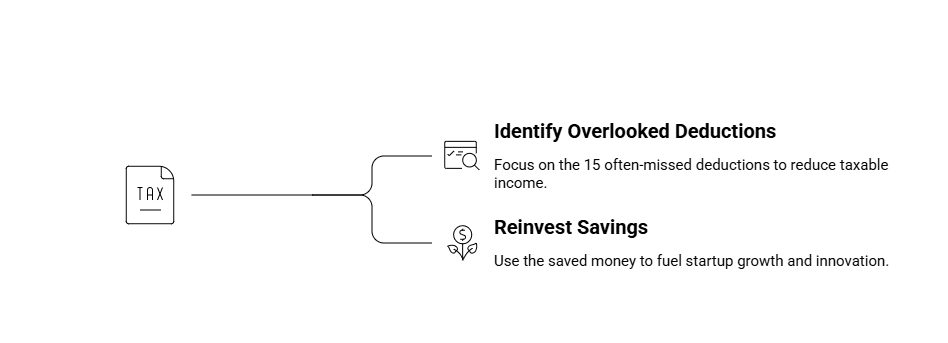
Why Tech Startups Need a Modern Tax Deduction Strategy
Tech startups often have distinct spending patterns: software subscriptions, R&D investments, hardware purchases, and cloud infrastructure costs. Traditional bookkeeping practices may miss deductions relevant in this fast-evolving space, leading to higher tax bills than necessary.
Moreover, some deductions require precise documentation and timing to maximize their benefit. Founders who proactively align their accounting with these nuances can better optimize tax savings and retain capital for innovation and scaling.
Before diving into the deductions themselves, consider a comprehensive tax strategy—such as the approach described in our 10-step guide to saving money on taxes for small businesses—which emphasizes timely bookkeeping, thorough documentation, and targeted deductions tailored to your startup’s phase and spend profile.
Essential Small Business Tax Deductions for Tech Startups
1. Research & Development (R&D) Expenses
Many tech founders logically invest heavily in software development, product innovation, and experimental projects. The federal R&D tax credit can significantly offset the cost of these legitimate innovation-related expenses. Beyond the credit itself, eligible R&D expenses can sometimes be amortized or deducted directly.
This includes employee wages tied to development, software licenses specifically for R&D, and even certain cloud computing costs associated with prototyping. Don’t skip on meticulous tracking of these costs to fully leverage this deduction.
Learn more on structuring your tax filings around R&D by hiring business tax services.
2. Startup Costs
Tech startups often incur a variety of expenses before officially launching, such as market research, business registration fees, legal consultations, and prototype development. The IRS allows you to deduct up to $5,000 of startup costs in the first year, with remaining costs amortized over 15 years.
Tracking and categorizing these early expenses can unlock immediate savings—founders sometimes overlook this when they're consumed with product development.
3. Home Office Deduction
For many founders, especially in early-stage startups, your home doubles as your office. The IRS permits deductions for a dedicated space used exclusively and regularly for business. This can include a portion of rent, utilities, insurance, and even depreciation on your home.
Documentation here is key: measurements of your office vs. total home space and consistent use records. This deduction is frequently overlooked or underutilized.
4. Cloud Service & SaaS Subscriptions
As tech startups increasingly rely on cloud infrastructure (e.g., AWS, Azure) and SaaS tools (e.g., GitHub, Slack), these operational expenses are fully deductible as business expenses. Be sure to differentiate personal from business subscriptions to optimize deductions.
Keep digital payment records neatly organized, as these subscriptions recur monthly and can accumulate substantially over a tax year.
5. Equipment & Computer Hardware
Purchasing laptops, servers, networking gear, or other hardware critical to your startup qualifies for both Section 179 expensing and bonus depreciation, allowing immediate full or partial deduction in the year of purchase rather than capitalizing and depreciating over time.
Founders should plan major equipment buys strategically within fiscal years to maximize tax efficiency.
6. Professional Services Fees
Payments for attorneys, accountants, consultants, and even outsourced bookkeeping services are deductible. For tech startups with complex legal needs around IP or contracts, this often sizeable deduction is too easily underestimated.
Maintaining clear invoices and records of these professional service fees is essential.
7. Employee Benefits & Healthcare Premiums
Tech companies offering health insurance and other fringe benefits to employees can deduct these costs. Self-employed founders paying their own premiums may also qualify for specific deductions.
Staying on top of current IRS guidelines ensures you claim the maximum legally allowed deductions here.
8. Business Meals and Entertainment
The rules around deducting meals and entertainment have shifted recently but remain an area many founders misunderstand. For business meals with clients, employees, or partners that qualify, 50–100% of costs may be deductible. Clear business purpose documentation and receipts are essential.
9. Travel Expenses
Attending conferences, meeting investors, or traveling for client presentations can be deducted when properly documented. This includes airfare, lodging, taxis, and incidental expenses related specifically to business travel.
10. Technology Training and Education
Workshops, courses, certifications, or subscriptions to educational platforms that enhance your team’s tech skills can qualify as deductible expenses. Founders investing in continuous learning for themselves or the team should keep careful documentation of payment receipts and course relevance.
11. Utilities and Internet
For a dedicated office space beyond home, costs such as electricity, internet service, and phone lines used exclusively for business purposes are deductible. Separating out personal and business use is important for accuracy.
12. Marketing, Advertising & Website Costs
From Google Ads to branding consultants and website hosting fees, tech startups incur substantial marketing expenses that can all be deducted. These costs not only drive growth but also provide tangible tax relief.
13. Loan Interest
Interest paid on business loans or credit lines is deductible. Founders using debt to finance their startup’s early stages should factor this into their tax planning.
14. Depreciation of Owned Software
If your startup develops proprietary software, you may be able to depreciate its costs over multiple tax years—depending on development stages or capitalized costs. This strategic approach can smooth tax liabilities over time.
15. Retirement Plan Contributions
If you’ve set up a retirement plan (like a SEP IRA or Solo 401(k)) for yourself or your employees, contributions until the tax filing deadline can be deducted, reducing taxable income while investing in team stability.
Practical Steps to Maximize Tax Deductions as a Founder
Stay Organized from Day One
Using business accounting tools to capture receipts and expenses as they happen reduces scrambling at tax time. Train your team to tag expenses and upload documentation promptly.
Keep Business and Personal Accounts Totally Separate
From credit cards to checking accounts, cleanly separating business and personal finances is crucial to simplify deductions like travel, entertainment, and office expenses.
Reference IRS-Supported Deduction Guidelines
Tax laws evolve yearly. Keep updated with trusted sources like the IRS Small Business and Self-Employed Tax Center to ensure your deductions align with compliance standards.
Partner with Advisors Who Understand Startups
Working with accounting professionals familiar with venture-backed tech businesses enables more accurate deduction claims and better audit risk management.
Time Your Expenses Strategically
CapEx and other major spend decisions should be made with tax calendars in mind. Stretch your deduction strategy over fiscal years to soften taxable income and reduce cash leakage.
Streamline Your Tax Process
Unlocking small business tax deductions tailored to tech startups requires more than just generic accounting — it demands founder-centric strategy, sharp documentation, and understanding of industry-specific expenditures. From R&D credits to home office deductions and cloud costs, this guide covers 15 deductions too often missed by founders rushing past tax details amid scaling pressures.
As a founder or finance lead navigating the dynamic world of tech startups, tax season brings both opportunity and complexity. Unlocking small business tax deductions can make a significant impact on your startup’s cash flow and growth capacity — yet many founders overlook valuable deductions unique to the tech ecosystem.
This guide highlights 15 often-overlooked deductions specifically relevant to tech startups in 2026, helping you take a more strategic, founder-friendly approach to your tax planning and documentation.
Why Tech Startups Need a Modern Tax Deduction Strategy
Tech startups often have distinct spending patterns: software subscriptions, R&D investments, hardware purchases, and cloud infrastructure costs. Traditional bookkeeping practices may miss deductions relevant in this fast-evolving space, leading to higher tax bills than necessary.
Moreover, some deductions require precise documentation and timing to maximize their benefit. Founders who proactively align their accounting with these nuances can better optimize tax savings and retain capital for innovation and scaling.
Before diving into the deductions themselves, consider a comprehensive tax strategy—such as the approach described in our 10-step guide to saving money on taxes for small businesses—which emphasizes timely bookkeeping, thorough documentation, and targeted deductions tailored to your startup’s phase and spend profile.
Essential Small Business Tax Deductions for Tech Startups
1. Research & Development (R&D) Expenses
Many tech founders logically invest heavily in software development, product innovation, and experimental projects. The federal R&D tax credit can significantly offset the cost of these legitimate innovation-related expenses. Beyond the credit itself, eligible R&D expenses can sometimes be amortized or deducted directly.
This includes employee wages tied to development, software licenses specifically for R&D, and even certain cloud computing costs associated with prototyping. Don’t skip on meticulous tracking of these costs to fully leverage this deduction.
Learn more on structuring your tax filings around R&D by hiring business tax services.
2. Startup Costs
Tech startups often incur a variety of expenses before officially launching, such as market research, business registration fees, legal consultations, and prototype development. The IRS allows you to deduct up to $5,000 of startup costs in the first year, with remaining costs amortized over 15 years.
Tracking and categorizing these early expenses can unlock immediate savings—founders sometimes overlook this when they're consumed with product development.
3. Home Office Deduction
For many founders, especially in early-stage startups, your home doubles as your office. The IRS permits deductions for a dedicated space used exclusively and regularly for business. This can include a portion of rent, utilities, insurance, and even depreciation on your home.
Documentation here is key: measurements of your office vs. total home space and consistent use records. This deduction is frequently overlooked or underutilized.
4. Cloud Service & SaaS Subscriptions
As tech startups increasingly rely on cloud infrastructure (e.g., AWS, Azure) and SaaS tools (e.g., GitHub, Slack), these operational expenses are fully deductible as business expenses. Be sure to differentiate personal from business subscriptions to optimize deductions.
Keep digital payment records neatly organized, as these subscriptions recur monthly and can accumulate substantially over a tax year.
5. Equipment & Computer Hardware
Purchasing laptops, servers, networking gear, or other hardware critical to your startup qualifies for both Section 179 expensing and bonus depreciation, allowing immediate full or partial deduction in the year of purchase rather than capitalizing and depreciating over time.
Founders should plan major equipment buys strategically within fiscal years to maximize tax efficiency.
6. Professional Services Fees
Payments for attorneys, accountants, consultants, and even outsourced bookkeeping services are deductible. For tech startups with complex legal needs around IP or contracts, this often sizeable deduction is too easily underestimated.
Maintaining clear invoices and records of these professional service fees is essential.
7. Employee Benefits & Healthcare Premiums
Tech companies offering health insurance and other fringe benefits to employees can deduct these costs. Self-employed founders paying their own premiums may also qualify for specific deductions.
Staying on top of current IRS guidelines ensures you claim the maximum legally allowed deductions here.
8. Business Meals and Entertainment
The rules around deducting meals and entertainment have shifted recently but remain an area many founders misunderstand. For business meals with clients, employees, or partners that qualify, 50–100% of costs may be deductible. Clear business purpose documentation and receipts are essential.
9. Travel Expenses
Attending conferences, meeting investors, or traveling for client presentations can be deducted when properly documented. This includes airfare, lodging, taxis, and incidental expenses related specifically to business travel.
10. Technology Training and Education
Workshops, courses, certifications, or subscriptions to educational platforms that enhance your team’s tech skills can qualify as deductible expenses. Founders investing in continuous learning for themselves or the team should keep careful documentation of payment receipts and course relevance.
11. Utilities and Internet
For a dedicated office space beyond home, costs such as electricity, internet service, and phone lines used exclusively for business purposes are deductible. Separating out personal and business use is important for accuracy.
12. Marketing, Advertising & Website Costs
From Google Ads to branding consultants and website hosting fees, tech startups incur substantial marketing expenses that can all be deducted. These costs not only drive growth but also provide tangible tax relief.
13. Loan Interest
Interest paid on business loans or credit lines is deductible. Founders using debt to finance their startup’s early stages should factor this into their tax planning.
14. Depreciation of Owned Software
If your startup develops proprietary software, you may be able to depreciate its costs over multiple tax years—depending on development stages or capitalized costs. This strategic approach can smooth tax liabilities over time.
15. Retirement Plan Contributions
If you’ve set up a retirement plan (like a SEP IRA or Solo 401(k)) for yourself or your employees, contributions until the tax filing deadline can be deducted, reducing taxable income while investing in team stability.
Practical Steps to Maximize Tax Deductions as a Founder
Stay Organized from Day One
Using business accounting tools to capture receipts and expenses as they happen reduces scrambling at tax time. Train your team to tag expenses and upload documentation promptly.
Keep Business and Personal Accounts Totally Separate
From credit cards to checking accounts, cleanly separating business and personal finances is crucial to simplify deductions like travel, entertainment, and office expenses.
Reference IRS-Supported Deduction Guidelines
Tax laws evolve yearly. Keep updated with trusted sources like the IRS Small Business and Self-Employed Tax Center to ensure your deductions align with compliance standards.
Partner with Advisors Who Understand Startups
Working with accounting professionals familiar with venture-backed tech businesses enables more accurate deduction claims and better audit risk management.
Time Your Expenses Strategically
CapEx and other major spend decisions should be made with tax calendars in mind. Stretch your deduction strategy over fiscal years to soften taxable income and reduce cash leakage.
Streamline Your Tax Process
Unlocking small business tax deductions tailored to tech startups requires more than just generic accounting — it demands founder-centric strategy, sharp documentation, and understanding of industry-specific expenditures. From R&D credits to home office deductions and cloud costs, this guide covers 15 deductions too often missed by founders rushing past tax details amid scaling pressures.
This article was co-written by:
Content
This article was co-written by:
2026
© Haven All Rights Reserved
Haven is a financial technology company, not an FDIC-insured bank. Deposit account services are provided by OMB Bank, Member FDIC. Funds deposited into eligible checking and savings accounts are held at OMB Bank and may be eligible for FDIC insurance up to applicable limits. FDIC insurance protects against the failure of an FDIC-insured bank. Certain conditions must be satisfied for pass-through deposit insurance coverage to apply. Fees, terms, and conditions apply.
Cryptocurrency products and services are separate from the deposit account services provided by OMB Bank. Cryptocurrency is not offered, sponsored, endorsed, administered, held, or supported by OMB Bank. Cryptocurrency and other digital assets are not deposits, are not FDIC-insured, are not guaranteed by OMB Bank, and may lose value.
2026
© Haven All Rights Reserved
Haven is a financial technology company, not an FDIC-insured bank. Deposit account services are provided by OMB Bank, Member FDIC. Funds deposited into eligible checking and savings accounts are held at OMB Bank and may be eligible for FDIC insurance up to applicable limits. FDIC insurance protects against the failure of an FDIC-insured bank. Certain conditions must be satisfied for pass-through deposit insurance coverage to apply. Fees, terms, and conditions apply.
Cryptocurrency products and services are separate from the deposit account services provided by OMB Bank. Cryptocurrency is not offered, sponsored, endorsed, administered, held, or supported by OMB Bank. Cryptocurrency and other digital assets are not deposits, are not FDIC-insured, are not guaranteed by OMB Bank, and may lose value.
2026
© Haven All Rights Reserved
Haven is a financial technology company, not an FDIC-insured bank. Deposit account services are provided by OMB Bank, Member FDIC. Funds deposited into eligible checking and savings accounts are held at OMB Bank and may be eligible for FDIC insurance up to applicable limits. FDIC insurance protects against the failure of an FDIC-insured bank. Certain conditions must be satisfied for pass-through deposit insurance coverage to apply. Fees, terms, and conditions apply.
Cryptocurrency products and services are separate from the deposit account services provided by OMB Bank. Cryptocurrency is not offered, sponsored, endorsed, administered, held, or supported by OMB Bank. Cryptocurrency and other digital assets are not deposits, are not FDIC-insured, are not guaranteed by OMB Bank, and may lose value.